FSAE - Ohio State

Member
As a member of Formula Buckeyes, I contributed to drivetrain design and mechanical development for Ohio State’s electric Formula SAE vehicle. After demonstrating my technical ability through the cooling plate design competition, I was selected to lead the outboard gearbox project.
Outboard Drive Project Lead
As project lead, I have worked on compact drivetrain architecture, gearbox packaging, CAD development, MATLAB-based design optimization, and integration with surrounding systems such as the upright, brakes, bearings, and thermal constraints. This role has strengthened my skills in mechanical design, leadership, system integration, and performance-driven engineering.

Interactive Engineering Case Study
Explore the Parametric Outboard Drivetrain
See how I combined parametric CAD, iLogic, MATLAB, strength calculations, SKF supplier data, and automated visualization to evaluate 64 Formula SAE drivetrain configurations.
V1
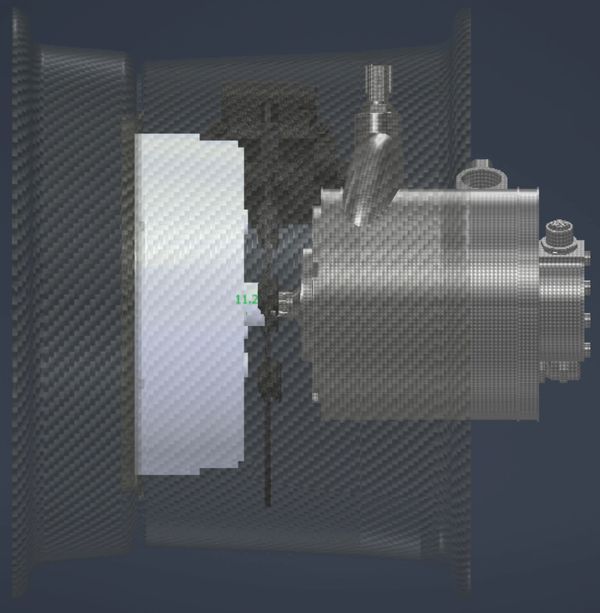
V1 focused on placing the major drivetrain components into the wheel package to understand the available space and identify design constraints. This version was less about final geometry and more about testing how the motor, gearbox, bearings, and output could fit together. It also introduced the idea of using the ring gear as the gearbox output, which became an important part of the compact drivetrain architecture.
V2

V2 introduced a major design change by reversing the order of the compound planetary gear arrangement. This helped improve the packaging strategy and opened up a more practical path for fitting the gearbox within the tight outboard space. This version focused heavily on gear layout, ratio development, and understanding how the revised planetary architecture affected the overall drivetrain design.
V3

V3 moved beyond the gearbox by focusing on how the outboard drive would connect to the rest of the corner assembly. This version placed more emphasis on mounting the gearbox to the upright, integrating the brake system, and understanding how the drivetrain would interact with bearings, fasteners, rotor placement, and surrounding suspension components.
V4

V4 is the refined version of the V3 model. This design improved the overall packaging, clarified component relationships, and better accounted for manufacturability, serviceability, and system integration. By this stage, the model had evolved from a packaging concept into a more complete outboard drive assembly with a clearer path toward final design.
Design Process

MATLAB
I used MATLAB to explore gear ratios, tooth count combinations, pitch diameters, and compound planetary gearbox geometry. This was the project where I first learned how to use MATLAB as a design tool, allowing me to quickly test drivetrain configurations before committing to a CAD model.
Parametric Modeling
In V4, I implemented parametric modeling to make the drivetrain assembly easier to update as the design changed. By linking key dimensions and design variables, I could adjust gearbox geometry, packaging constraints, and component relationships more efficiently throughout the refinement process.
KISSsoft
I used KISSsoft to support gear design validation and better understand the strength, geometry, and feasibility of the gear set. This helped connect the early MATLAB calculations to more realistic gear performance considerations.
Additional Photos